 Back
Back



Disaster recovery is often seen as a sprint—focused on rescuing survivors, clearing debris, and restoring basic services. While the immediate response is crucial, the real work begins long after the initial crisis has passed. True, long-term recovery is a marathon, not a sprint, requiring ongoing support to help communities rebuild and regain stability long after the headlines fade.
For the families sweeping mud out of their living rooms or the small business owners staring at a “Closed” sign for the third month in a row, the disaster isn’t over. It has simply changed shape.
At Good360, we know that recovery is measured in years, not days. While immediate relief is vital, true resilience is built during the long-term recovery phase—a period that is notoriously underfunded and overlooked. It is here, in the weeks and months after the headlines fade, that the unseen impacts of disaster take root. From the economic ripple effects in tourism towns to the mental health toll on frontline workers, the path to normalcy is steep. But with the right support, resources, and partnership, it is a path we can navigate together.
The Economics of the “Unseen”
When we talk about disaster damage, we often talk about the visible: flattened homes, downed power lines, and washed-out roads. In the U.S. alone, disasters cause an average of $150 billion in damages each year*. Yet, the physical destruction is only the tip of the iceberg. The submerged portion of that iceberg is the long-term economic paralysis that grips a community.
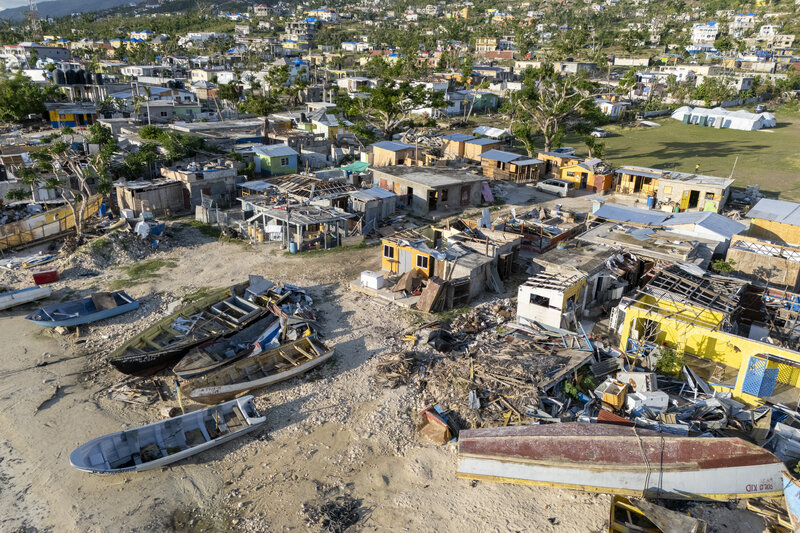
Consider the aftermath of Hurricane Melissa, which struck Jamaica in October 2025. In the coastal settlement of Whitehouse, the storm didn’t just tear off roofs; it dismantled an entire ecosystem of livelihood. The fishing village, a hub of commerce and culture, was decimated. Boats were smashed, engines flooded, and traps destroyed.
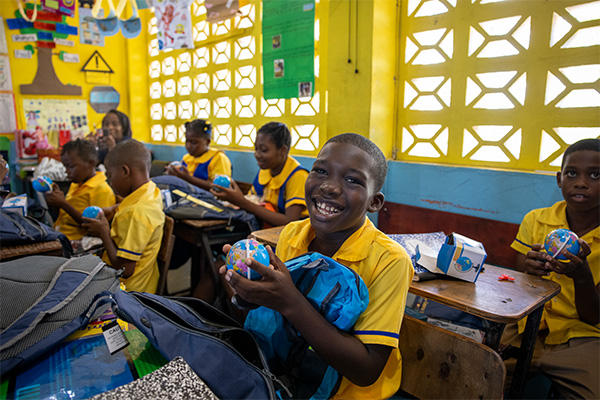
This isn’t just about lost equipment; it’s about lost agency. When a fisher cannot fish, they cannot buy gasoline or food from local vendors. They cannot pay school fees for their children at the Culloden Infant School nearby. The school and the fishing village are interdependent—when one fails, the other falters. The “unseen” impact here is a stalled local economy where families are forced to wait for aid rather than returning to work.
We see a similar story unfolding in Kerrville, Texas, following the devastating floods of July 4, 2025. While the physical cleanup is underway, the economic scars are deepening. Kerrville is a river town; its economy thrives on tourism, RV parks, and riverfront rentals. But with the riverbanks damaged and zoning regulations changing, those “Snowbirds” and summer visitors aren’t returning.
Riverfront Airbnbs are gone. Campgrounds that have hosted generations of families are shuttered. Small businesses that rely on that seasonal foot traffic are struggling to keep the lights on. These are the secondary disasters that don’t make the evening news—the slow erosion of a community’s financial stability.
The Mental Toll: Supporting the Supporters
Long-term recovery is as much a mental challenge as it is a physical one. The adrenaline of the immediate response eventually wears off, replaced by the crushing weight of bureaucracy, insurance claims, and the realization that “normal” is a long way off.
This pressure cooker environment affects survivors, but it also impacts those often forgotten: the helpers.
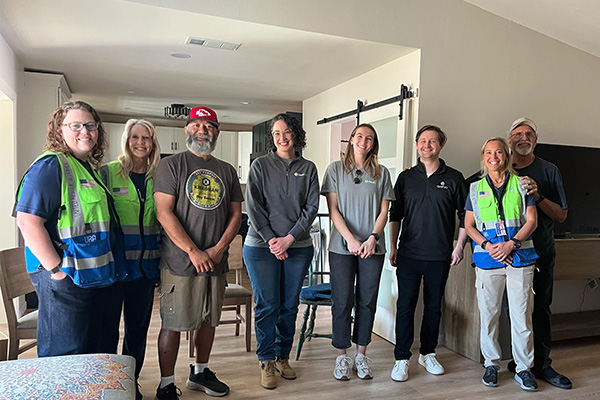
During a recent trip to Kerrville, our team sat alongside local leaders and volunteers for a workshop with our nonprofit partner, Hummingly. We focused on the cognitive science of stress and the reality of the “recovery roller coaster.” We learned that the people leading the charge—the pastors, the nonprofit directors, the local government officials—are often running on empty, grappling with the unseen cognitive effects of prolonged pressure.
Jolie Wills, CEO of Hummingly, reminds us that supporters often feel their own resilience wearing thin. They are trying to hold up a community while their own foundations are shaking. Long-term recovery requires us to “support the supporters,” providing them with the mental health tools and grace they need to endure the marathon. If the helpers burn out, the recovery stalls.
Restoring Agency Through the Right Goods
So, how do we combat these unseen impacts? How do we build resilience when 4 in 10 small businesses never reopen after a disaster*?
The answer lies in restoring agency. It’s not just about sending stuff; it’s about sending the right stuff that empowers people to rebuild their own lives.
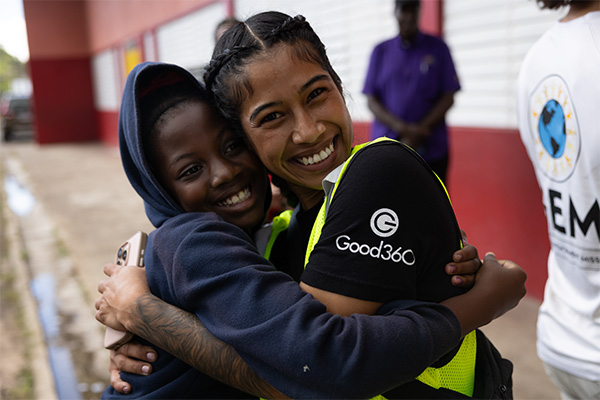
In Jamaica, “return to livelihood” was the number one request from the community. They didn’t just want handouts; they wanted the means to work. By providing wire for fishing nets, fiberglass to repair boats, and solar power for farming, we aren’t just patching a hole—we are restarting an economic engine. We are giving a father the ability to earn a paycheck and a mother the ability to send her child to school.
In Texas, the need has shifted from emergency food kits to building materials. A home cannot be livable without insulation, drywall, and flooring. By partnering with organizations like Global Empowerment Mission (GEM) and United Rescue Alliance (URA) to distribute these specific, high-value goods, we help families move out of temporary shelters and back into their own safe havens.
Investing in Resilience
Preparedness and long-term recovery are two sides of the same coin. The data tells us that for every $1 invested in disaster readiness, $13 is saved in recovery costs*. When we invest in long-term solutions—whether that’s resilient building materials, mental health support, or livelihood restoration—we are buying down the cost of the next disaster.
We cannot stop the rain from falling or the wind from blowing. But we can change how we respond when the skies clear. We can choose to stay engaged when the urgency fades. We can choose to look for the unseen impacts—the lost wages, the closed storefronts, the exhausted volunteers—and meet them with compassion and tangible support.
Recovery is a long road, but no community should have to walk it alone.
*Sources: FEMA, U.S. Census Bureau.