
 Back
Back

Venezuela Earthquakes
Emergency Response
Two powerful earthquakes struck northern Venezuela on June 24, 2026, devastating communities across La Guaira, Caracas, and beyond.
Good360 is responding.

“Within 48 hours of the earthquakes, we were on the phone with more than ten major nonprofits responding in Venezuela. What we’re hearing day after day is alarming. The needs are dire and growing by the hour. We haven’t even scratched the surface of the true level of devastation. Venezuelans lost everything overnight. People are without clean water, shelter, and urgent medical care right now.” — Cinira Baldi, CEO of Good360
Good360’s Emergency Response to the Venezuela Earthquakes
Good360 mobilized within 48 hours of the earthquakes, delivering an initial shipment of critical relief supplies to Caracas through Global Empowerment Mission (GEM). The shipment included tarps, outdoor and camping gear, blankets, work gloves, safety shoes, first aid kits, and trash bags to support immediate response efforts.
In partnership with Amazon Disaster Relief, Good360 coordinated a second shipment of 24 pallets to support Project HOPE and GEM. This shipment included hygiene kits, menstrual hygiene management kits, portable generators, water filters, tarps, cleanup kits, diapers, baby wipes, and solar lights to help meet the evolving needs of affected communities.
Response operations are shifting from immediate life-saving assistance to sustained humanitarian support, with priority needs focused on emergency shelter, health services, water, sanitation and hygiene (WASH), food assistance, and protection for displaced populations. As the response evolves, Good360 continues to work alongside nonprofit, corporate, and humanitarian partners to monitor conditions, assess emerging needs, and align future shipments with response priorities, ensuring critical supplies reach affected communities where they will have the greatest impact.
Looking ahead, Good360 will continue monitoring partner activation requests, international humanitarian appeals – including the active IFRC Emergency Appeal and the anticipated UN OCHA Flash Appeal – and opportunities for additional corporate donor engagement in Venezuela’s recovery. The U.S. Treasury’s OFAC general license, issued June 26 and authorizing earthquake relief-related transactions through October 23, significantly expands the operational window for U.S.-based organizations supporting relief efforts and provides greater flexibility for partner and donor engagement. Good360 will continue to provide updates as the response evolves.
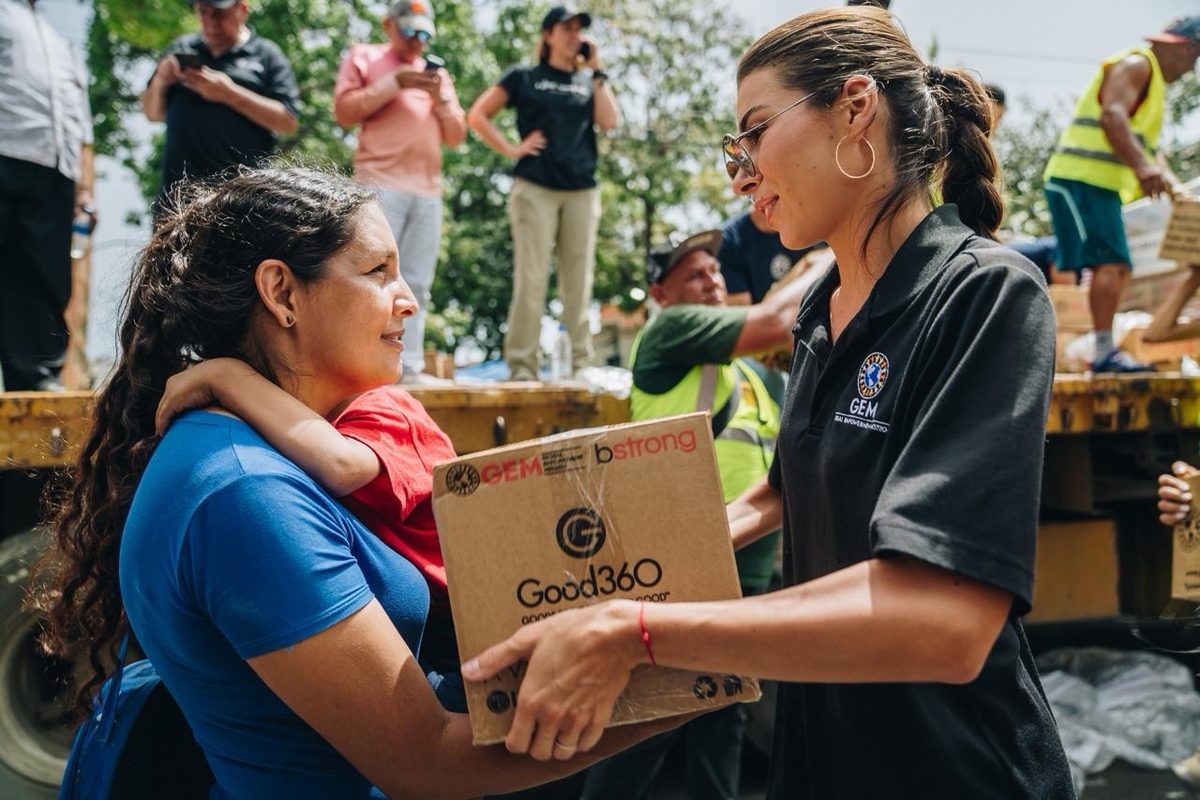
Photo Credit: GEM


Photo Credit: GEM
Current Needs from our Partners on the Ground
Below is a list of immediate needs that our partners have identified:
- Search-and-rescue equipment to support life-saving operations and access affected populations.
- Trauma and emergency medical supplies to treat injuries and address urgent health needs.
- Safe drinking water to prevent dehydration and reduce the risk of waterborne diseases.
- Temporary shelter materials for displaced households and those whose homes have been damaged or destroyed.
- Power and communications equipment to restore critical services and facilitate coordination among responders.
- Sanitation and hygiene supplies to reduce public health risks and maintain basic living conditions.
- Child-focused relief items including nutrition, protection, hygiene, and psychosocial support materials.
Anticipated Needs from our Partners in the Near Future
As rescue and relief operations transition into recovery, priority needs are expected to expand to possibly include:
- Housing repair and reconstruction materials.
- Health system support and restoration of healthcare services.
- Livelihood recovery and income-generating assistance.
- Continued support for vulnerable populations, including children, older persons, and people with disabilities.


Your Donation Can Make a Difference.
In times of crisis, everyday items — shoes, toothpaste, and backpacks — offer more than just convenience. They provide the first stepping stones to recovery. Your donation today can connect people in need with essentials like these when and where they are needed most. Here are just a few examples of what your generosity can do.*
*Based on audited financial statements. Includes the fair market value of donated goods distributed through our programs.
Venezuela Earthquake Disaster Overview
Last updated July 13, 2026.
- Venezuela was struck by two consecutive earthquakes on June 24, 2026, at 6:00 PM local time. The first measured magnitude 7.2, followed 39 seconds later by a magnitude 7.5. Both epicenters were located along the San Felipe–Yumare–Montalbán axis in the north-central region. Authorities have since recorded more than 512 aftershocks, keeping risk conditions elevated.
- The 7.5 is the strongest earthquake to hit Venezuela in more than 125 years.
- As of the last official casualty update, at least 4,490 people have been killed and at least 16,740 have been injured, per Venezuelan government officials. The figure is expected to continue rising as rescue teams access more areas, with a high probability of exceeding 10,000 fatalities.
- More than 16,300 people lost their homes outright; another 28,300 have homes now uninhabitable. 17,907 people have been left homeless. At least seven states have been impacted, with La Guaira recording the highest level of destruction.
- NASA/Oregon State satellite analysis estimates roughly 59,000 buildings damaged, and in La Guaira state specifically, 80% of buildings collapsed.
- Tens of thousands are still being reported missing according to crowdsourced trackers.
- A new UN estimate puts direct physical damage at $37 billion, a first assessment by the UN Office for Disaster Risk Reduction (UNDRR). This is up substantially from earlier UNDP figures of $4.7–8.7B.
- Critical infrastructure across the country is severely disrupted. Venezuelan authorities report damage to roads, bridges, and tunnels across seven states. Telecommunications sustained the heaviest losses at around $5 billion, followed by energy generation and roads. Internet connectivity is severely degraded. Widespread power outages have compounded the crisis and hampered rescue coordination.
- The Venezuelan Chamber of Commerce president stated that clean up alone could take up to 4 to 5 years, with an estimated 1.25 million tons of debris estimated along the coastal corridor between Catia La Mar and Caraballeda.
Damage Reports by Region
Caracas (Multiple Municipalities)
Dozens of buildings collapsed, including a bank in Caracas. In an unspecified area of southeastern Caracas, near-total collapse or heavy damage was reported to high-rise buildings. Los Palos Grandes and Altamira were identified by Interior Minister Cabello as the worst-affected municipalities. 39 makeshift shelters created with capacity for 11,100 people (about 5,000 occupied)
La Guaira (Coastal State)
Declared a disaster zone. Worst structural damage reported. The highest percentage of buildings collapsed in Catia La Mar, Mamo, La Guaira, and Los Corales. More than 8,600 people are living in 26 shelters locally. The Maiquetía airport was damaged and remains closed
Yaracuy State (Epicentral Region)
Near-epicenter zone. San Felipe and Yumare areas are directly affected. Among areas with the heaviest aftershock activity
Trujillo, Carabobo, Aragua, Miranda
Building collapses and structural damage reported across all states, widespread structural damage reported; roads, bridges, and tunnels damaged. 1,060 displaced people distributed across 22 sites in Miranda
Broader Region
Shaking felt across Venezuela and as far as Brazil’s Amazon, approximately 1,700 km from Caracas.
Your Gift Gets Essential Supplies to Families Now
Good360 mobilized within 48 hours. Your donation supports shipments already en route.