 Back
Back



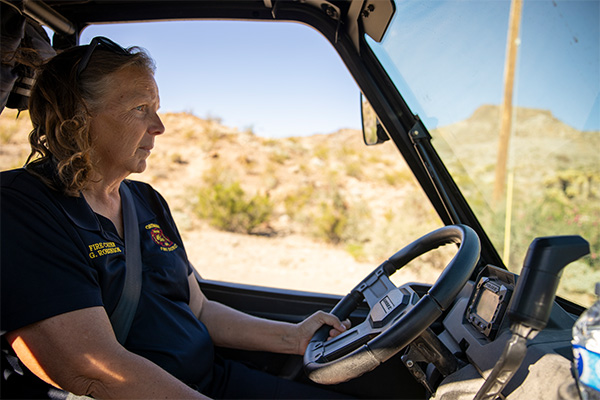
Without official public services like a hospital, police department, or food bank, the Oatman community in Arizona relies entirely on a volunteer fire district to respond to all 911 calls and medical emergencies. When Chief Gail Robinson arrived in 2021, that district existed in name only—there wasn’t a single piece of operating equipment for fire and medical responses.
“I believe in being proactive, not reactive,” Chief Gail said as she sat in the station’s 4×4 quad overlooking Oatman, Arizona—an unincorporated mining camp tucked into the desert mountains. She’s since rebuilt the Oatman Fire District from the ground up, creating a working department capable of protecting not just the 72 residents, but the half-million tourists who visit Oatman’s wild burros and historic Route 66 storefronts every year.
How Prepositioning Reduced Response Time During the 2025 Floods
Years earlier, flash flooding had stranded tourists for days after cars were swept away and roads were cut off. Outside assistance was slow to reach them. Chief Gail was determined that such a situation would never happen again and utilized her resources to better equip her community with supplies needed to recover from future extreme weather events.
That work became critical when flash flooding hit Oatman in October 2025. This time Oatman was ready. With support from the Center for Disaster Preparedness, Good360 worked with its nonprofit partner COPE Preparedness to preposition shipping containers filled with emergency supplies at fire stations in Oatman and similar rural, highly vulnerable communities across Arizona and California. This proactive approach—securing supplies in advance and strategically staging goods in underserved areas—eliminated costly delays and ensured equitable support when disaster struck.
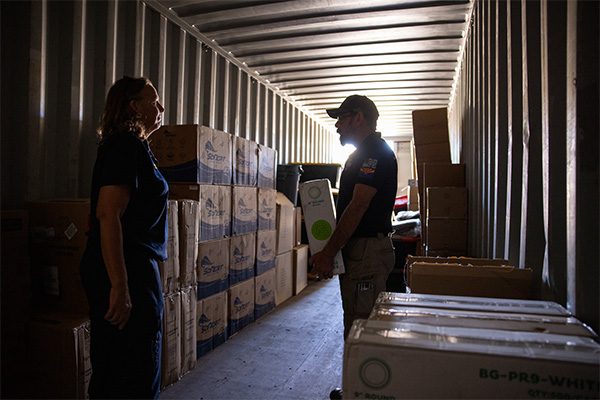
Why Prepositioned Emergency Supplies Matter
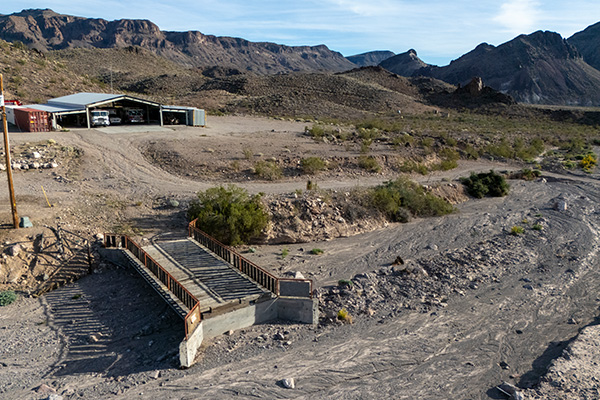
When the floodwaters came, those prepositioned supplies made all the difference. Donated brooms swept water out of stores before silt could settle and ruin inventory. Emergency food and blankets were waiting for stranded tourists. Stockpiled water jugs and toilet paper kept people safe and healthy while they waited for roads to reopen. Oatman could self-rescue instead of waiting for outside help to arrive.
“Oh, it’s basically everything,” Jim Cenami, a volunteer firefighter, said when asked what it means to have supplies ahead of time. “You need to have that. If you don’t have it, it’s like you’re scrambling trying to get things accomplished, and when you have the supplies right there, it makes a big difference. We can respond to it quicker and get better action and get better care.”
Building Regional Resilience Beyond One Town
Impact doesn’t stop at Oatman’s borders. The community shares supplies with neighboring fire departments, and these straightforward items—cleaning supplies, emergency blankets, basic necessities—multiply their impact across multiple towns. One town’s preparedness becomes a network of prepared and resilient communities.
Good360 partners with corporations to source donated supplies, enabling us to anticipate community needs and preposition the right products for each community. As disasters become more frequent and severe, communities shouldn’t have to wait for the resources they need to respond and recover. Research shows that every dollar invested in disaster readiness saves $13 in recovery costs. Good360 and its partners have shifted from reactive to proactive disaster response—prepositioning supplies, strengthening local logistics, and coordinating with community partners to ensure faster, more equitable support when it matters most. This has enabled rural and highly vulnerable communities like Oatman to have the critical resources in place to protect residents and visitors alike, building resilience that extends far beyond any single emergency.